
NEPA Home Repair Assistance: A 2026 Guide for Owners of Older Houses
Many homes around Scranton and Wilkes-Barre were built before 1940. This source-backed guide starts with legitimate repair programs and safety priorities, then explains how to compare repairing, listing, or selling as-is without pressure.
The short answer
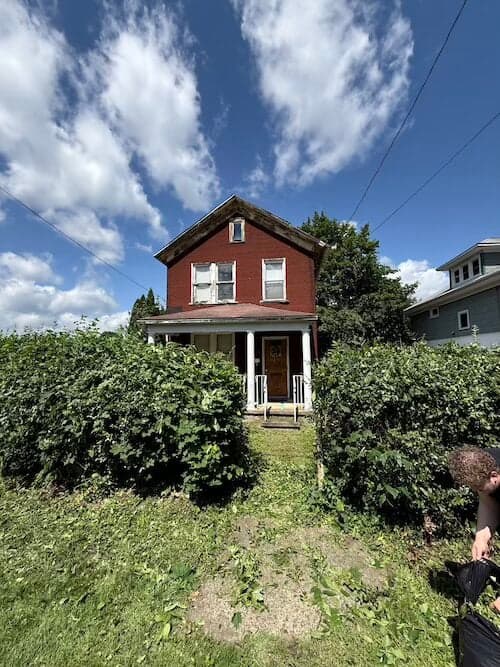
Do not start with “repair everything” or “sell immediately.” First identify urgent conditions, obtain written scopes, check whether legitimate assistance applies, and compare the expected net and timeline of each selling path. Older homes can be well maintained; newer homes can still have serious problems.
NEPA's housing is older than Pennsylvania's overall
The Institute's 2026 community housing primer, using 2024 American Community Survey five-year estimates, reports that roughly one-third of housing units in Lackawanna and Luzerne Counties were built in 1939 or earlier. That is a regional housing-stock fact—not a diagnosis of any individual property.
The same report explains why deferred roof, electrical, heating, plumbing, insulation, and accessibility work can accumulate. But a well-maintained century-old house may be in better condition than a much newer house with water damage or poor alterations.
36.1%
Lackawanna County
of housing units were built in 1939 or earlier
30.3%
Luzerne County
of housing units were built in 1939 or earlier
25.0%
Pennsylvania
of housing units were built in 1939 or earlier
Source: The Institute, What to Know About Housing in Northeastern Pennsylvania: A Primer for the Community (2026), p. 7. The table identifies the underlying source as the U.S. Census Bureau American Community Survey five-year estimates.
A practical order for evaluating repairs
A prioritized scope helps prevent cosmetic work from consuming money needed for safety or water protection. This is a decision framework, not an inspection or engineering opinion.
- 01
Active safety or habitability problems
Start with conditions that may make the house unsafe to occupy: suspected gas leaks, electrical arcing or burning odors, major structural movement, no working heat in dangerous weather, or active sewage problems. Leave the property and contact emergency services, the utility, or an appropriately licensed professional when the condition warrants it. Do not use an article or online estimate as a diagnosis.
- 02
Water entry and the building envelope
A roof leak, failed flashing, broken drainage, or an opening in the exterior can turn a limited repair into damaged framing, finishes, and mechanical systems. Identify and stop the source before spending money on cosmetic work. A qualified roofer, contractor, or engineer can help distinguish routine maintenance from a larger defect.
- 03
Electrical, plumbing, heating, and structure
Older does not automatically mean defective, but original or heavily modified systems deserve a condition-based inspection. Ask for written scopes that separate immediate safety work, code-triggered work, recommended modernization, and optional upgrades. That makes contractor estimates easier to compare.
- 04
Lead-safe and health-related work
Homes built before 1978 are more likely to contain lead-based paint. Disturbing painted surfaces can create hazardous dust, so use EPA guidance and qualified lead-safe professionals when testing or renovation is appropriate. Moisture, mold, asbestos, and indoor-air concerns also require issue-specific professional guidance rather than assumptions based only on a home's age.
Read EPA's pre-1978 renovation guidance - 05
Efficiency and cosmetic improvements
Insulation, air sealing, kitchens, baths, and finishes matter, but they usually belong after safety, water, structure, and core systems are understood. If the goal is a sale, compare the likely net benefit of each improvement—not just whether it might make the house look newer.
Before hiring someone, turn every estimate into the same scope
- • Ask what condition was observed and what testing supports the recommendation.
- • Separate required or urgent work from recommended and optional upgrades.
- • Confirm permits, licensing, insurance, exclusions, allowances, and change-order rules.
- • Ask whether hidden conditions could change the price and how that would be documented.
- • Compare written scopes—not just totals that may include different work.
Repair-help programs to check in 2026
Homeowners sometimes decide they must sell before checking whether a legitimate program could address an urgent condition. These official sources were reviewed on August 3, 2026. HBS does not administer or control them, and listing a program does not mean funding or eligibility is available for a particular property.
Contact the administering agency directly before paying a contractor, signing a financing agreement, or assuming reimbursement. Program rules, geographic coverage, intake windows, and available funds can change.
City of Scranton Home Rehabilitation Program
City of ScrantonThe City says its program is intended to help income-eligible, owner-occupant households bring homes up to code. Its published eligibility summary requires the applicant to own and use the property as a principal residence and be current on City taxes and fees. Work can include general construction plus electrical and mechanical rehabilitation.
Verify first: The City determines eligibility, scope, funding, and current intake status. Contact the Office of Community Development before relying on assistance in a repair or sale timeline.
Official source: Scranton Office of Community DevelopmentWilkes-Barre Emergency Rehabilitation Grant
City of Wilkes-BarreThe City's requirements, updated June 1, 2026, describe assistance for an owner-occupied single-family house with a major emergency housing-code violation. The published requirements also address inspection consent, insurance, taxes, and household income. Approved work is determined case by case and performed through a City-licensed contractor.
Verify first: This is an emergency program, not a general remodeling fund. The City decides whether a condition and household qualify and whether money is available.
Official source: City of Wilkes-Barre Emergency Rehab ProgramLuzerne County Emergency Homeowner Rehabilitation
Eligible Luzerne County municipalitiesLuzerne County lists an emergency homeowner rehabilitation program for immediate threats such as loss of heat or water, hazardous electrical conditions, qualifying lead hazards, and accessibility problems. Its published rules cover properties in Luzerne County outside the cities of Wilkes-Barre, Hazleton, Pittston, and Nanticoke.
Verify first: The official document describes assistance as a non-interest-bearing, five-year forgivable loan secured by a lien. Selling or transferring the home before the term ends can require repayment of the unforgiven balance. Confirm current intake, eligibility, and terms directly with the County.
Official source: Luzerne County official program requirementsPennsylvania Weatherization Assistance Program
Available through local agencies statewidePennsylvania's Weatherization Assistance Program helps qualifying low-income households save energy, lower utility bills, and improve home comfort and safety. Pennsylvania DCED says the program is delivered through local agencies in all 67 counties.
Verify first: Weatherization is not a substitute for a full structural renovation. Eligibility, wait times, and approved measures are determined by the local provider and audit.
Official source: Pennsylvania DCED Weatherization AssistanceCalculate the decision using net proceeds—not emotion or gross price
A renovated listing can produce a higher headline price and still be the wrong financial choice if repairs, holding time, financing, and selling expenses absorb the difference. A direct offer can be convenient and still be too low. Put every path on the same worksheet.
Your comparison worksheet
Estimated net = realistic sale price − every cost, concession, and risk allowance you expect to carry.
Four reasonable paths for an older home
The right choice depends on the property, household, money, timeline, and tolerance for uncertainty. A trustworthy guide should show more than one option.
| Path | May fit when | Main tradeoff |
|---|---|---|
| Repair and stay | The home still works for your household, the important repairs are financially manageable, and assistance or financing is realistic. | You keep the home, but you also keep the repair-management, contractor, permit, and unexpected-condition risk. |
| Repair, then list | You have time and cash, the retail market supports the finished condition, and the expected price gain exceeds repair, holding, and selling costs. | Potentially higher gross price, but the budget and timeline can move before a financed buyer closes. |
| List in current condition | You want broad market exposure and can accept inspection, financing, appraisal, and buyer-negotiation uncertainty. | The market sets the price, but some buyers or lenders may require repairs or concessions before closing. |
| Compare a direct as-is offer | Certainty, speed, privacy, or avoiding upfront repairs matters more than pursuing the highest possible gross listing price. | The offer should reflect the buyer's repair and resale risk, so compare written net proceeds and contract terms—not only the headline price. |
Questions to ask before accepting any direct offer
A direct sale should reduce uncertainty, not hide it. Get the answers in writing and have a qualified Pennsylvania professional review documents when appropriate.
- Are you the actual buyer, and can you show current proof of funds?
- Can the agreement be assigned to another buyer, and under what terms?
- How much earnest money is deposited, where is it held, and when is it refundable?
- Does the buyer have an inspection, financing, appraisal, or unilateral cancellation contingency?
- Which closing costs, transfer taxes, liens, cleanout costs, or other charges come out of the seller's proceeds?
- Is the offer price fixed after the walkthrough, and what could cause it to change?
- Which Pennsylvania title company or closing professional will handle settlement?
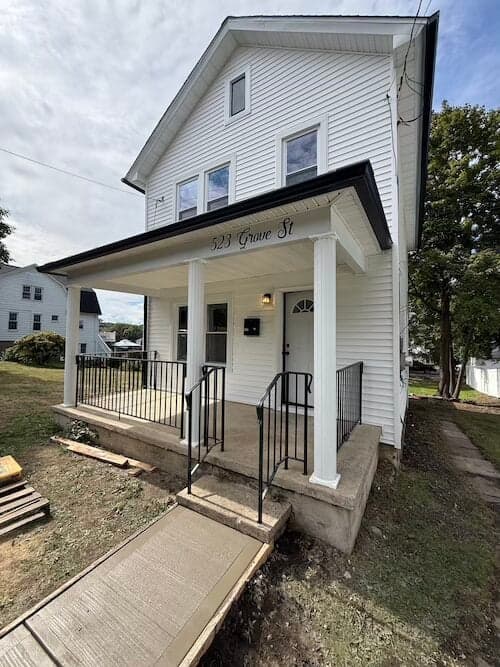
First-hand renovation experience helps our team understand why a direct offer accounts for condition and risk. It does not mean every older home needs this level of work—or that selling is always better than repairing.
Frequently asked questions
Is an old Northeast Pennsylvania house automatically unsafe?
No. Age alone does not establish a defect or make a home unsafe. Condition, maintenance, alterations, water exposure, and the state of individual systems matter more. Use qualified professionals to evaluate specific concerns.
What should I repair first in an older NEPA home?
Begin with active safety and habitability issues, then stop water entry and assess structure and major systems. Energy and cosmetic improvements usually come later. The right order depends on the property and should be confirmed by qualified professionals.
Are home-repair grants guaranteed in Scranton or Wilkes-Barre?
No. Local programs have geographic, ownership, occupancy, income, insurance, tax, inspection, condition, funding, and intake requirements. Contact the administering agency directly and do not begin work assuming reimbursement or approval.
Can I sell a Pennsylvania house without making repairs?
Yes. A homeowner can explore listing in current condition or compare a direct as-is offer. Each path has different pricing, timing, disclosure, inspection, financing, and contract considerations. Review the likely net proceeds and terms before choosing.
How do I compare repairing and listing with an as-is offer?
Estimate the realistic retail sale price, then subtract repairs, contingency, holding costs, commissions or service fees, seller closing costs, concessions, and the value of your time. Compare that expected net and timeline with the written net terms of an as-is offer.
Does House Buying Solutions buy older homes with major repairs?
Yes. House Buying Solutions evaluates properties in their current condition across Northeast Pennsylvania. Requesting an offer is optional; homeowners should still compare repair assistance, traditional listing, and other qualified buyers when those paths may fit better.
Helpful Next Steps
Continue Your Research
Use these HBS resources to compare condition, location, timing, and selling paths.
Major-Repair Selling Guide
See how an as-is sale works when a Pennsylvania house needs a roof, mechanical systems, structural work, or a full cleanout.
Read the repair guide →Compare Every Selling Path
Review listing, FSBO, and direct-sale tradeoffs before deciding how much time, cash, and uncertainty to take on.
Compare your options →Scranton Home-Selling Options
Explore local neighborhoods, seller situations, and direct-sale information for properties in the Scranton market.
View Scranton guide →Wilkes-Barre Home-Selling Options
See local project proof and selling information for homes throughout Wilkes-Barre and central Luzerne County.
View Wilkes-Barre guide →When the House Is Only Part of the Decision
Property condition often overlaps with inheritance, tenants, health, accessibility, or municipal requirements.
Inherited Older Home
Coordinate probate, family decisions, cleanout, condition, and timing before choosing whether to repair or sell.
Learn more →Landlord Burnout
Compare another repair cycle with selling a rental that has deferred maintenance, vacancy, or tenant complications.
Learn more →Health or Accessibility Change
When stairs, maintenance, care needs, or a move make the current home impractical, compare paths without rushing the decision.
Learn more →Condemned Scranton Property
A condemnation requires property-specific municipal steps. Start with the dedicated Scranton homeowner guide.
Learn more →Optional next step
Compare a written as-is offer with your repair plan
House Buying Solutions is a local direct buyer based at 401 Church Street in Archbald. We can evaluate the property in its current condition and give you a written option to compare. There is no obligation to accept it, and you should choose the path that produces the best overall result for your household.